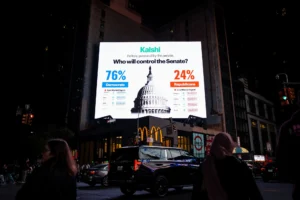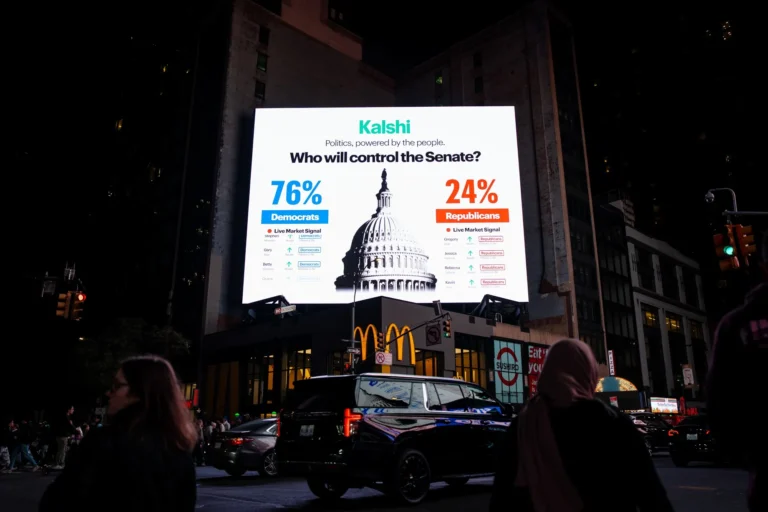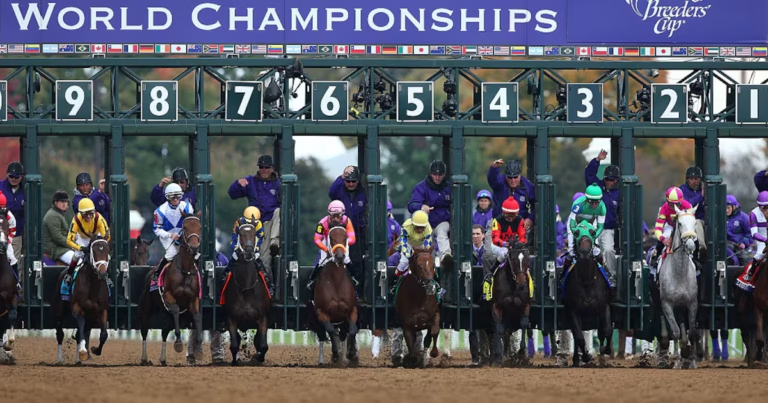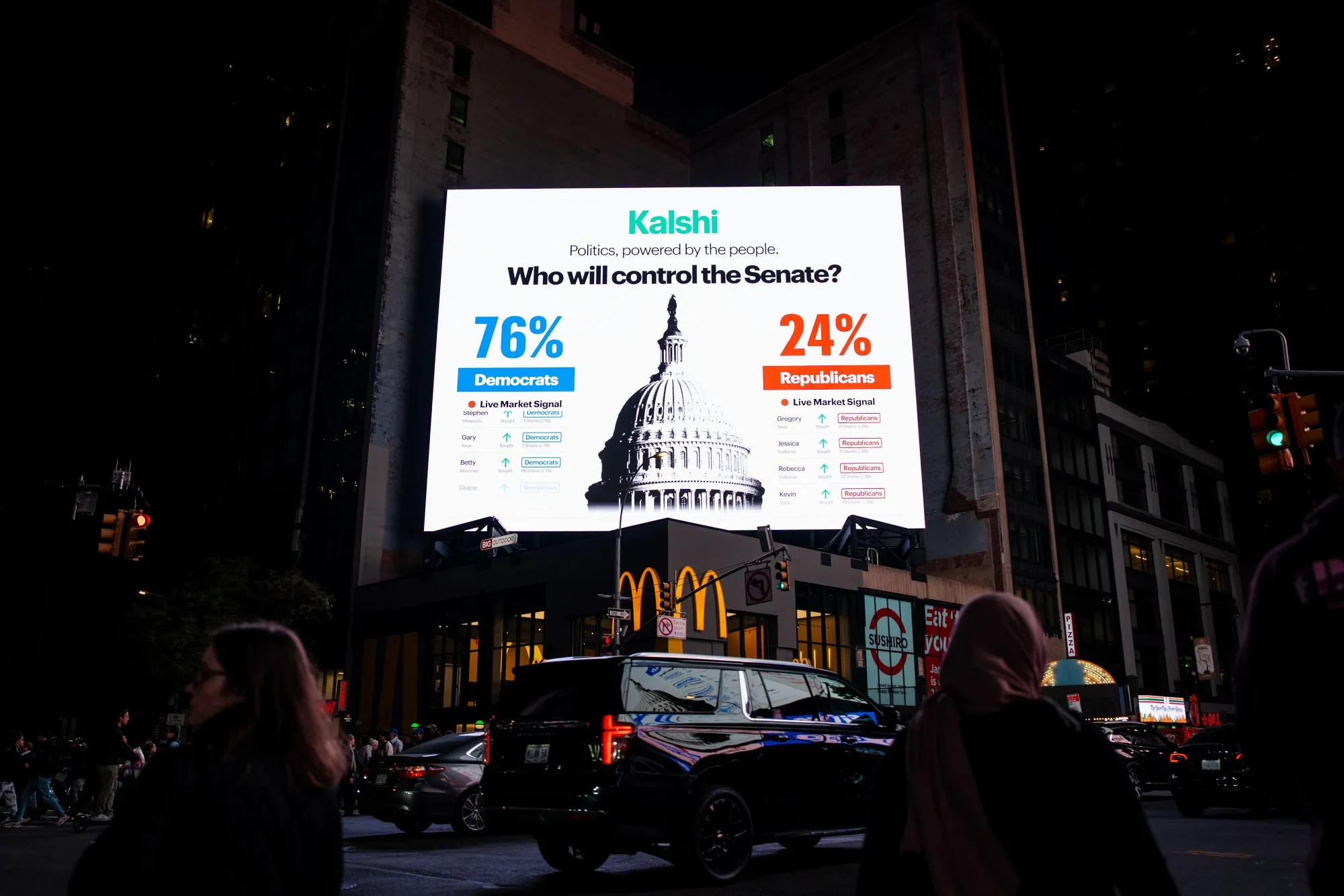
More than $1.4 billion was traded on midterm contracts, about $1.1 billion on Kalshi and more than $340 million on Polymarket, according to CNN. On election eve, Kalshi gave Democrats a 74% chance of winning both the House and Senate, and Polymarket put it at 78%. Democrats won both, flipping seven Senate seats on the way.
Most coverage will treat this as vindication after the Brazil miss. I’m more interested in what the scorecard actually shows, and in who just won. Prediction markets correctly predicted a Congress led by the party whose senators, including Elizabeth Warren and Richard Blumenthal, have spent the past year trying to regulate prediction markets.
Key Takeaways
- The main call: Kalshi had Democrats at 74% to win both chambers and Polymarket had them at 78%. Democrats won both.
- Senate races: Polymarket’s favourite won eight of nine key Senate races, according to a post-election tally. South Carolina was the only miss.
- The miss: South Carolina Democrat Annie Andrews won 51.2% to 46.8% after markets priced her at roughly 29–32%.
- Where markets beat the ratings: Kansas, where CBS rated the race “lean Republican” but markets had Democrat Adam Hamilton at about 63%. He won 50.9% to 46.1%.
- Money traded: $1.4B+ in total, including more than $46M on the Texas Senate race alone on Kalshi.
- The irony: The new Democratic Congress includes the senators pushing hardest to regulate the industry.
The Midterms Scorecard
| Market | Pre-election favourite (approx.) | Result | Called? |
|---|---|---|---|
| Both chambers | Democrats, 74% (Kalshi) / 78% (Polymarket) | Democrats win both | ✅ |
| Senate control | Democrats, ~74–77% | Democrats | ✅ |
| Texas Senate | Talarico (D), ~71–76% | Talarico flips seat | ✅ |
| Maine Senate | Jackson (D), ~73% | Jackson beats Collins | ✅ |
| Kansas Senate | Hamilton (D), ~63% | Hamilton 50.9%–46.1% | ✅ |
| Iowa Senate | Turek (D), ~52% | Turek flips seat | ✅ (near coin-flip) |
| South Carolina Senate | Republican, ~68–71% | Andrews (D) 51.2%–46.8% | ❌ |
Prices are approximate and come from election-eve reporting by Bitcoin.com, Rotowire, Oddschecker, Kalshi and KuCoin. Sources differ by a few points.
Where the Markets Beat the Pundits
The most notable result is Kansas. On election day, CBS rated the race “lean Republican.” Kalshi and Polymarket both priced Hamilton at about 63% against Sen. Roger Marshall, and Polymarket had him at 64.5% just before polls closed. Hamilton won by nearly five points.
Texas was similar. Recent Marist polling had Democratic candidates in Texas, Michigan and Maine ahead by only about two points, but markets priced them at 70% to 75%. On Kalshi, Talarico peaked at 75% at the start of the week and opened Election Day at about 71%. He flipped a seat Democrats hadn’t won in 38 years.
The pollsters were catching up. “Just within the last few hours, we had the equivalent of a polling earthquake,” CNN’s Harry Enten said two days before the vote. “It tends to point to a blue wave.” The markets had already priced that in.
Where They Missed
South Carolina was the miss. Kalshi and Polymarket priced the Republican at roughly 68% to 71%, and DDHQ’s model had 61%. Annie Andrews won by 4.4 points. Polling averages also had the Republican ahead, so this was a shared miss, not a case of markets ignoring the polls.
Brazil vs. the Midterms: What 70% Actually Means
This is the part I keep coming back to. Ten days ago, Polymarket priced Lula at 17.5% while votes were being counted, and he won. This week, its Senate favourites won eight of nine. Both results fit a market that’s calibrated reasonably well.
A 70% favourite is supposed to lose about three times in ten. Across nine races with favourites mostly priced between 52% and 76%, you’d expect two or three upsets. The markets had one. A 17.5% outcome, like Lula’s win, should happen roughly once in six tries.
| Event | Market price for eventual winner | How often that should happen |
|---|---|---|
| Lula wins Brazil run-off (Oct. 25) | As low as 17.5% | ~1 in 6 |
| Andrews wins South Carolina | ~29–32% | ~1 in 3 |
| Hamilton wins Kansas | ~63% | ~2 in 3 |
| Democrats win both chambers | 74–78% | ~3 in 4 |
Prediction markets don’t predict the future with certainty. They’re probabilities, and over two big elections in ten days, those probabilities looked about right. That’s harder to sell than “truth machine,” but it’s a more accurate description.
The Integrity Questions Haven’t Gone Away
The prices were accurate. Integrity concerns are still open.
- Candidates betting on themselves: Kalshi suspended six 2026 candidates for improperly betting on their own races.
- Thin markets: The Anti-Corruption Data Collective examined 21,811 midterm markets on Polymarket, Polymarket US and Kalshi and found many were thinly traded, which makes them easier to manipulate.
- State law: A Baltimore Sun analysis counted more than $1.1 million in Maryland election trades, even though Maryland’s top election official says state law bans election wagering. Kalshi disputes that state law applies.
- Congress: Senators Warren and John Curtis wrote to both CEOs before the vote, citing past cases of candidates betting on their own races.
- Voter influence: The Center for Democracy and Technology warned that markets can distort candidate decisions, affect voter behaviour and undermine confidence in election results.
Kalshi CEO Tarek Mansour called 2026 “the first prediction-market election.” He’s right, and the industry should expect more scrutiny as a result.
What a Democratic Congress Means for Prediction Markets
The markets correctly predicted a Congress in which:
- Elizabeth Warren, who has accused the CFTC of being too close to the industries it regulates, gains more influence over financial oversight.
- Richard Blumenthal, who has introduced legislation calling prediction markets “substantially the same as betting, wagering, gambling and sports gambling,” gains more power to move it.
- CFTC oversight hearings, and the Trump family’s ties to both platforms (Donald Trump Jr. advises Kalshi and his firm led a Polymarket round), become easier targets for investigation.
Add the pending Supreme Court petition, Utah’s criminal charges against Kalshi’s founders and 44 states arguing sports contracts are illegal gambling, and the industry now faces pressure from courts, states and Congress at the same time.
What I’m Watching
The midterms went well for Kalshi and Polymarket. They called the main result, beat the race ratings in Kansas and Texas, and handled more than $1.4 billion in volume without a major incident. That gives them a strong argument for their value as forecasting tools.
But forecasting accuracy isn’t what’s being litigated. Courts and regulators are deciding whether a contract on Talarico beating Paxton is a financial instrument or a bet, and that question doesn’t depend on whether the price was right. The industry just correctly predicted the election of a Congress likely to answer it.
FAQ: Prediction Markets and the 2026 Midterms
Did prediction markets correctly predict the 2026 midterms?
Mostly, yes. Kalshi and Polymarket gave Democrats about a 74% to 78% chance of winning both chambers, and Democrats won both. Polymarket’s favourites won eight of nine key Senate races, with South Carolina the exception.
How much was bet on the 2026 midterms?
More than $1.4 billion, about $1.1 billion on Kalshi and more than $340 million on Polymarket, according to CNN.
Which race did prediction markets get wrong?
South Carolina. Markets priced the Republican at roughly 68% to 71%, and Democrat Annie Andrews won 51.2% to 46.8%. Polling averages also missed.
Did prediction markets miss Brazil’s election too?
Yes. Polymarket priced Lula as low as 17.5% on election day before he won Brazil’s Oct. 25 run-off. A 17.5% outcome should happen about once in six tries.