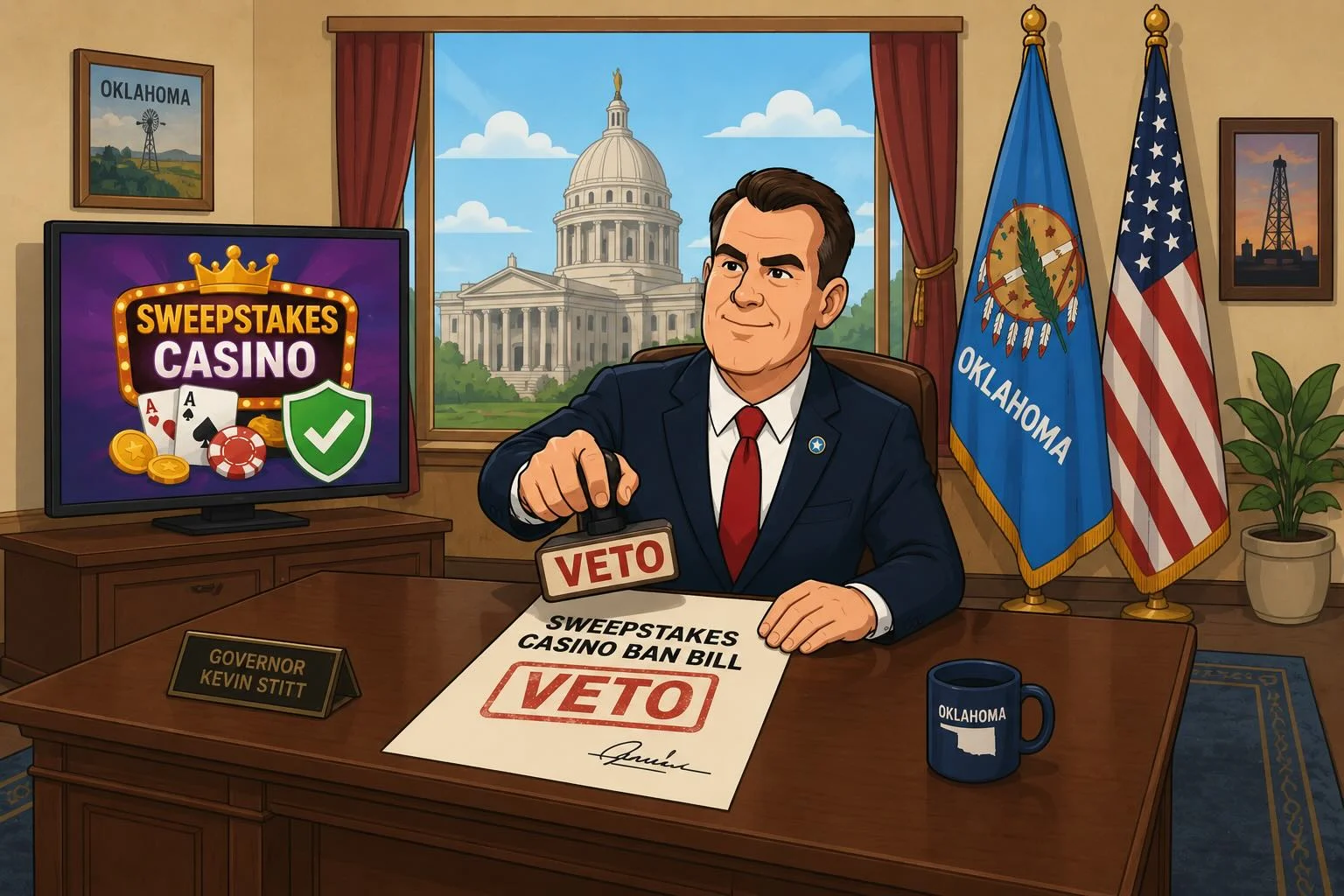
102-29. That was the combined vote when Oklahoma lawmakers overrode Gov. Kevin Stitt’s veto of SB 1589 in May: 34-10 in the Senate and 68-19 in the House. Both cleared the two-thirds threshold easily. On Nov. 1, the ban takes effect, and every sweepstakes casino still serving Oklahoma players has to be gone. Most coverage treats this as one more state added to the list. I’m more interested in what the bill covers beyond the operators, and in who it leaves alone.
The law closes the loophole sweepstakes operators have relied on for years. Online casino gambling was already illegal in Oklahoma, but dual-currency platforms worked in a gray area by offering free play alongside purchasable coins. SB 1589 defines those coins as “representatives of value” used for gambling, which removes the argument that free Sweeps Coins make the product a promotion. Violations are felonies. As in California, liability goes beyond operators to suppliers, payment processors, geolocation providers and affiliates. Stitt vetoed the bill as too broad. “Oklahoma’s gaming laws must be clear, targeted, and fair,” he wrote, adding that “Senate Bill 1589 does not accomplish that end.” The legislature didn’t accept that.
What I keep coming back to is the carve-out. SB 1589 explicitly protects tribal gaming conducted under the Indian Gaming Regulatory Act, and Oklahoma’s tribal casinos aren’t affected at all. That’s consistent with what’s happening nationally. Sweepstakes bans keep passing in states where a powerful existing gaming industry wants the competition gone, whether that’s tribes, commercial casinos or a state lottery. Oklahoma joins Indiana, Maine, Louisiana and Tennessee as states that passed bans in 2026, along with California’s AB 831, which took effect at the start of the year. Oklahoma also has no regulated online casino market. Players losing sweepstakes sites won’t move to a legal app. They’ll go to a tribal casino in person, find a sweepstakes site still taking the risk, or go offshore.
Whether Nov. 1 matters depends on enforcement, and other states show how that plays out. Illinois sent 65 cease-and-desist letters in February. By May, only two operators had geoblocked the state, and Stake took until late September to go redeem-only. Florida’s approach has been more effective. It sued operators and their payment processors in August, and Google, Meta, Reddit, Snap and TikTok now face an Oct. 23 deadline to explain how they keep sweepstakes ads away from Floridians. Oklahoma’s law gives it Florida-style tools from the start. Felony exposure for payment processors and geolocation vendors is a much stronger threat than a letter, because those companies have compliance departments and nothing to gain by testing a state AG.
Operators are already pulling back across the market. VGW shut down LuckyLand nationwide in September, The Win Zone is closing with an Oct. 23 redemption deadline, and Gambling Insider’s latest monthly update says the main story is platforms shutting down rather than new state laws. Oklahoma’s Nov. 1 deadline is likely to speed that up. The real test is Nov. 2: which brands are still accepting Oklahoma players, and whether the state goes after the payment companies serving them. If it does, the main question for the sweepstakes industry stops being which states still allow it and becomes which vendors will still work with it.