Bloomberg went through more than a billion trades on Kalshi and Polymarket, and the result is not flattering to either platform. Since early 2025, around half of all Kalshi trading volume has involved one side chasing a return of at least 1,000%. On Polymarket, longshots made up 52% of volume over the past 21 months. Those contracts lose roughly 98% of the time.
Most coverage will stop at the 98% figure. I’m more interested in what the data does to the industry’s legal argument. Kalshi, Polymarket and the rest have told federal judges, the CFTC and the Supreme Court that they run financial exchanges, places where informed traders turn information into prices. Bloomberg’s numbers describe something else: a retail crowd buying lottery tickets, with a small group of professionals taking the other side.
Key Takeaways
- Longshots dominate volume: About half of Kalshi’s volume since early 2025 and 52% of Polymarket’s over 21 months involved bets chasing returns of 1,000% or more (Bloomberg).
- Longshot buyers lose: Money on “yes” longshots lost an average of 15% on Kalshi and 27% on Polymarket, before platform fees of up to 7% (Bloomberg).
- Cheaper contracts lose more: A University College Dublin study found Kalshi buyers of contracts priced at 10 cents or less lost more than 60% of their money on average.
- Profits are concentrated: In an academic study of 588 million Polymarket trades, the top 1% of profitable users captured 76.5% of all profits.
- Polymarket disputes the framing: A spokesperson said longshots are only about 1% of its total volume. Even so, longshot trading across both platforms topped $600 million in September alone.
Kalshi vs. Polymarket: The Longshot Numbers
| Metric | Kalshi | Polymarket |
|---|---|---|
| Share of volume in longshot bets (1,000%+ potential return) | ~50% (since early 2025) | 52% (past 21 months) |
| Approximate loss rate on those contracts | ~98% | ~98% |
| Average loss on “yes” longshot money | –15% | –27% |
| Platform fees on top | Up to 7% | Up to 7% |
| Company response | No comment found | Spokesperson: longshots ~1% of total volume |
Source: Bloomberg analysis by Carolyn Silverman and Denitsa Tsekova, Oct. 7, 2026.
The gap between Bloomberg’s 52% and Polymarket’s 1% is large. Neither side’s methodology is fully public, so the most likely explanation is a difference in definitions: Bloomberg counts any trade where one side is chasing a longshot, while Polymarket may be counting only the longshot side’s dollars. Whichever measure is right, more than $600 million went into these bets across both platforms in September.
What the Academic Research Says
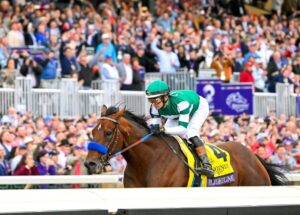
Bloomberg’s analysis matches what academic studies have found for months. A University College Dublin study by Constantin Bürgi, Wanying Deng and Karl Whelan looked at more than 300,000 Kalshi contract prices from 2021 through April 2025. The authors found prices were broadly informative but showed a “clear favorite–longshot bias.” The same bias shows up in horse racing, where bettors have overpaid for longshots for about a century.
| Kalshi contract price | Average return | Notes |
|---|---|---|
| 10 cents or less | Worse than –60% | About a third of all prices in the sample |
| Example: 5-cent contract that wins 3% of the time | –40% before fees | The price implies 5%, but it wins only 3% |
| Above 70 cents | Small positive return after fees | Favorites are underpriced |
| All contracts combined | –20% before fees | — |
Source: Bürgi, Deng & Whelan, UCD Centre for Economic Research, via FairGambling.
On Polymarket, a September study by Pat Akey, Vincent Grégoire, Nicolas Harvie and Charles Martineau covered 588 million trades and $67 billion in volume. It found a milder version of the same pattern. Weighted by dollars, purchases below 10 cents lost 19.3 cents per dollar. Sports longshots were the exception.
The bigger finding in that study is who makes the money:
| Who wins on Polymarket | Finding | Source |
|---|---|---|
| Top 1% of profitable users | Capture 76.5% of all profits | Akey, Grégoire, Harvie & Martineau |
| Top 0.1% of accounts | Take home 67% of all profits | Wall Street Journal |
| Share of users in the red | More than 70% | Wall Street Journal |
| Traders who qualify as “skilled” | 3.14% of accounts | London Business School / Yale |
Polymarket’s Defense: The “Sharps” Are Doing the Work
The industry’s best counterargument came before Bloomberg’s piece. CNBC reported on Sept. 30 that $158 million traded on Egypt winning the 2026 World Cup on Polymarket’s international exchange. That was more than the $152 million traded on Spain, which actually won, even though Egypt’s chances never went above 0.5%.
Kyle Gesuelli, who runs revenue and analytics at Polymarket, told CNBC that this volume is driven by professional traders correcting mispriced contracts. “It’s actually healthy for markets because it brings pricing imbalances back into balance,” he said.
That is partly true. Someone has to sell the Egypt contract at 0.4 cents. But it also confirms the critics’ point. If professionals are making money by selling longshots, then someone is buying them, and the academic data shows who that is. The structure of a sharp professional on one side and a retail buyer on the other is the business model of a sportsbook.
Prediction News, a trade outlet that is generally friendly to the sector, said so plainly: “If most volume is irrational longshot chasing, the price signal is noise, not signal.”
Why This Matters in Court
The timing is bad for both companies.
- New York has sued Polymarket and is seeking triple damages, arguing that every event contract is a bet under state law. Polymarket’s chief legal officer, Neal Kumar, called the filing “disappointing” and said: “We believe in New York and we’re staying here.”
- Ohio sent cease-and-desist letters to 10 prediction-market platforms on Oct. 5, with an Oct. 16 deadline.
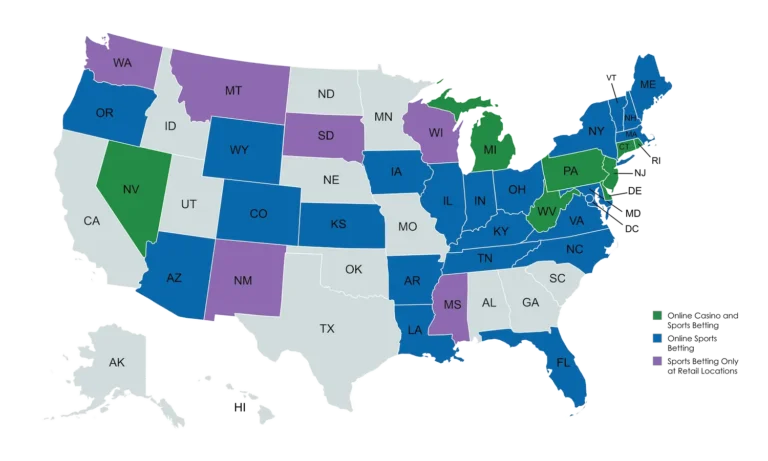
- Courts are split. The Sixth Circuit and Ninth Circuit have sided with the states, while the Third Circuit sided with Kalshi. Petitions asking the Supreme Court to resolve the preemption question are pending.
Each of those cases depends on what an event contract really is. The preemption argument requires a judge to accept that these are swaps traded on a federally regulated exchange for price discovery and hedging. A Bloomberg dataset showing half the volume is 1,000-to-1 longshots that lose 98% of the time fits the states’ argument much better than the platforms’. I’d expect state attorneys general to cite it in briefs within weeks.
The IPO Problem
There is also a commercial reason this matters. Kalshi is reportedly closing in on a $40 billion valuation in its last private round before an IPO, and both Kalshi and Polymarket are reportedly exploring listings as soon as 2027, according to CNBC. Kalshi has already cited a record $4.9 billion NFL weekend as evidence of growth. It also ended a volume rewards program amid questions about wash trading.
Volume is the main number both companies use to sell their story. A public listing means an S-1 filing, and an S-1 means investors will see what share of that volume comes from retail longshot buyers who mostly lose. That disclosure looks a lot like a sportsbook’s revenue mix. A sportsbook valuation is a lot lower than an exchange valuation.
The Bigger Picture
What I keep coming back to is how closely this matches the legal sports betting market. Sportsbooks make most of their money from parlays: low-probability, high-payout bets that retail customers love and almost always lose. Prediction markets have arrived at the same product through a different regulatory route. The difference is that sportsbooks don’t claim to be producing forecasts.
None of this means prediction markets are useless as forecasts. The UCD paper found prices get more accurate as markets near close, and favorites tend to be priced correctly. But that accuracy comes from a minority of traders taking money from a majority who are, in practical terms, gambling. Regulators, judges and future shareholders now have a billion-trade dataset showing it.
FAQ: Prediction Market Longshot Bets
What is a longshot bet on Kalshi or Polymarket?
It’s a contract priced very low, typically 10 cents or less, that pays $1 if the event happens. In Bloomberg’s analysis, these are bets with a potential return of 1,000% or more.
Do longshot bets lose money on prediction markets?
On average, yes. Bloomberg found “yes” longshot money lost 15% on Kalshi and 27% on Polymarket before fees. The UCD study found Kalshi contracts priced at 10 cents or less lost more than 60%.
Who makes money on Polymarket?
Very few people. An academic study of 588 million trades found the top 1% of profitable users took 76.5% of all profits, and the Wall Street Journal found more than 70% of users are in the red.
Are prediction markets gambling?
That is the question in front of the courts. The CFTC regulates Kalshi and Polymarket US as exchanges, but New York, Ohio and other states argue their event contracts are unlicensed bets. Federal appeals courts have split, and Supreme Court petitions are pending.