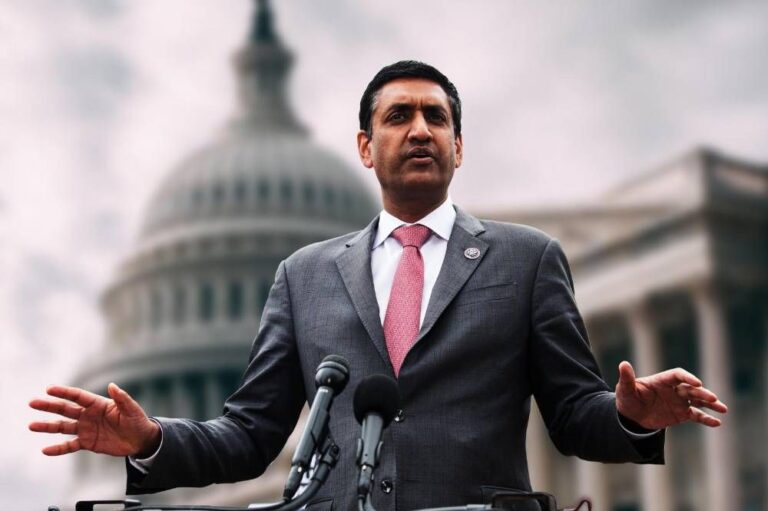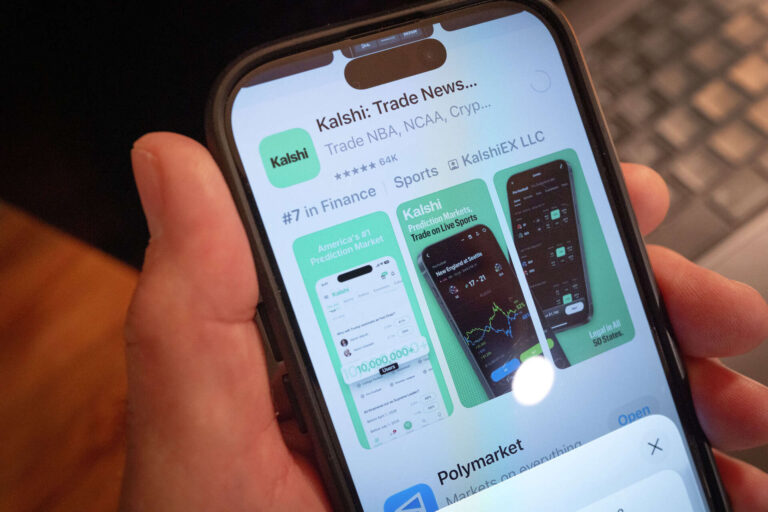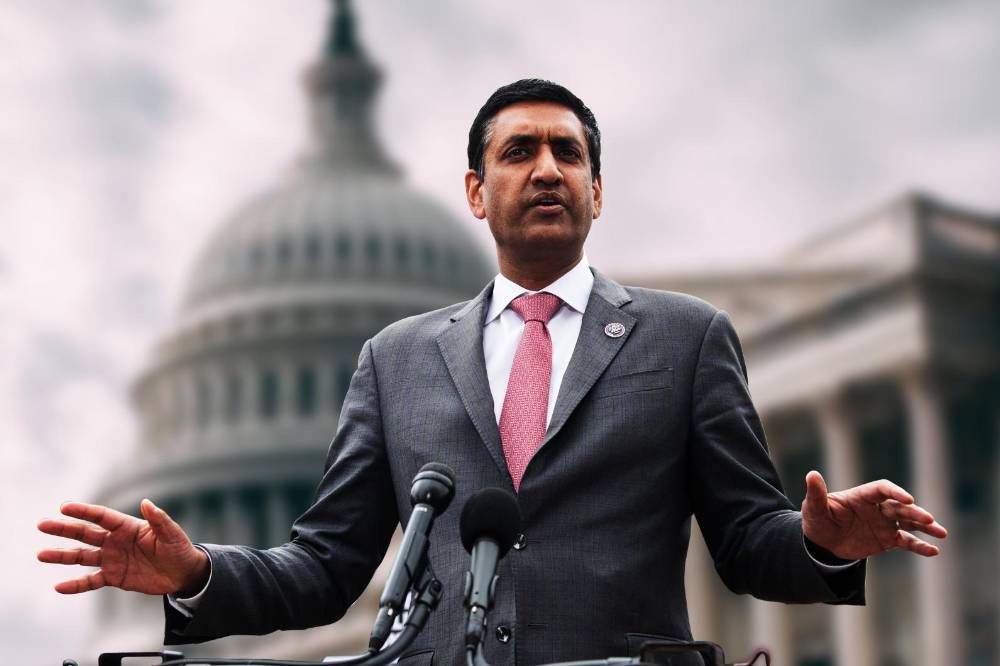
On the weekend of Nov. 7–8, Kalshi traded $10.69 billion in notional volume, 74.5% of all prediction-market activity, mostly on sports and parlay-style combos. Two days later, Rep. Ro Khanna (D-Calif.) said it should be banned.
“Sports prediction markets are sports betting disguised as financial trading,” Khanna posted on X on Nov. 10. “They flout state and tribal gambling laws, siphon state tax revenues, fuel addiction, and expose young Americans to public health risks while evading state consumer safeguards. Congress must ban them.”
Khanna hasn’t introduced a bill. But he’s the most prominent Democrat yet to call for a complete ban since the midterms, and he wasn’t alone that week.
Key Takeaways
- Khanna: He said on Nov. 10 that Congress “must ban” sports contracts on Kalshi and Polymarket. No legislation yet.
- Cortez Masto: On Nov. 9 she accused the Trump family of being “heavily invested” in prediction markets and said the CFTC’s geofencing directive is “intended to create profits for the President’s family.”
- Trump Jr.: He left his Kalshi advisory role on Nov. 12 after his firm, 1789 Capital, invested another $300M in rival Polymarket.
- Existing bills: The Schiff–Curtis bipartisan Senate bill would ban contracts that resemble “a sports bet or casino-style game.”
- The obstacle: President Trump’s veto. “Democrats win the gavel, but not the veto,” as InGame put it.
- Courts: Twenty states are in litigation with prediction markets, and the CFTC has sued states on the operators’ behalf in seven.
The Democratic Pushback
Khanna’s post came a day after Nevada Sen. Catherine Cortez Masto responded to the CFTC’s Nov. 6 order telling exchanges to stop geoblocking states.
“Federal courts have ruled repeatedly that states and Tribes regulate gambling within their territory. Sports ‘prediction markets’ are obviously gambling. But the Chairman of the CFTC is encouraging companies to keep offering these bets in violation of court orders,” she wrote.
“Let’s be clear about what’s happening: the Trump family is heavily invested in prediction market platforms. This move to undermine Tribal and state sovereignty is intended to create profits for the President’s family. That should outrage all of us.”
| Lawmaker | Party / state | Position |
|---|---|---|
| Ro Khanna | D-Calif. (House) | “Congress must ban them” (no bill yet) |
| Catherine Cortez Masto | D-Nev. (Senate) | Accuses Trump family and CFTC of undermining courts |
| Adam Schiff + John Curtis | D-Calif. + R-Utah (Senate) | Bipartisan bill to ban sports and casino-style contracts |
| Jeff Merkley | D-Ore. (Senate) | Bill to ban sports, politics and military contracts |
| Martin Heinrich | D-N.M. (Senate) | Letter urging regulation to protect tribal sovereignty |
| Greg Casar | D-Texas (House) | Bill restricting sports and war contracts |
| Elizabeth Warren + John Curtis | D-Mass. + R-Utah (Senate) | Demanding insider-trading data from Kalshi, Polymarket |
Trump Jr. Leaves Kalshi
The conflict-of-interest argument changed during the same week. Kalshi said on Nov. 12 that it had ended Donald Trump Jr.’s advisory role, not because of political pressure, but because his firm is backing its biggest competitor.
“We have mutually agreed to end Don’s advisory role after his firm’s significant investment in a competitor this past summer,” a Kalshi spokesperson told the Washington Post. “We are grateful for his contributions in helping us market Kalshi to more customers.”
1789 Capital, where Trump Jr. is a partner, has now put about $500 million into Polymarket ($200 million earlier, plus $300 million this summer). Polymarket was valued at $21 billion in August. Trump Jr. never invested in Kalshi but received $300,000 in equity, which the Financial Times reports has been heavily diluted. He has also advised Polymarket since August 2025.
The effect is that the Trump family’s ties now point mainly to Polymarket, while Kalshi, the market leader, has distanced itself. That doesn’t weaken Cortez Masto’s argument. It just changes which company it applies to most.
Can Democrats Actually Ban Sports Contracts?
This is the part I keep coming back to. Democrats control both chambers from January. They don’t control the White House, and a ban needs Trump’s signature.
“I don’t see a House and Senate flip to Democrats resulting in any type of outright ban on sports or political contracts,” said Felix Shipkevich, a Hofstra law professor, to Gambling Insider via SCCG.
| Tool | Needs presidential signature? | Realistic? |
|---|---|---|
| Ban on sports contracts (Schiff–Curtis) | Yes | Unlikely: veto |
| Appropriations limits on CFTC spending | Yes, in a must-pass bill | Possible pressure point |
| Oversight hearings on CFTC and Selig | No | Very likely |
| Subpoenas on insider trading and Trump ties | No | Likely |
| Blocking CFTC nominees (Senate) | No | Possible: Selig is the sole commissioner |
| State AG enforcement | No | Already happening in 20 states |
The realistic path isn’t a ban. It’s slowing things down through oversight hearings, subpoenas, pressure on CFTC Chair Michael Selig, who is currently the agency’s only commissioner, and support for state attorneys general in court. Democrats can make the industry’s federal protection costly to defend without passing a law.
Kalshi’s Response
Kalshi’s position hasn’t changed: sports contracts are federally regulated derivatives, and banning them would push activity to unregulated sites.
“Banning sports on regulated prediction markets would just push this behavior offshore, where no regulation exists,” a Kalshi spokesperson said in response to the Schiff–Curtis bill.
The volume suggests demand isn’t going away. Sports make up 80% to 90% of Kalshi’s monthly volume, according to Artemis. In a single weekend it did nearly four times what New York’s record-setting sportsbooks handled in all of October.
Public Opinion
Khanna has public sentiment on his side. A survey cited by Tech Brew found that 87% of voters want prediction markets regulated more tightly or banned. The Senate has already unanimously barred senators and Senate staff from using prediction markets. And problems keep surfacing: a Washington man is suing Kalshi over more than $308,000 lost on sports trades, ESPN has warned its on-air talent about insider betting, and Vanderbilt researchers flagged suspicious trades placed before the New York Times/Siena polls were released.
The Political Risk for the Industry
Most of this year’s industry risk has come from courts and states. Khanna and Cortez Masto make it clear that federal political risk is now real too. Democrats are unlikely to pass a ban before 2029. But a Democratic Congress can question Selig, subpoena insider-trading records, scrutinize the Trump family’s investments, and push the issue into the 2028 campaign.
For Kalshi, which is valued at about $40 billion and considering an IPO, that’s the kind of uncertainty that shows up as risk factors in an S-1 filing.
FAQ: Ro Khanna and Prediction Markets
What did Ro Khanna say about prediction markets?
On Nov. 10, 2026, Rep. Ro Khanna posted on X that sports prediction markets are “sports betting disguised as financial trading” and that “Congress must ban them.” He hasn’t introduced legislation.
Is there a bill to ban sports prediction markets?
Yes. Sens. Adam Schiff (D-Calif.) and John Curtis (R-Utah) have a bipartisan bill to ban contracts that resemble a sports bet or casino-style game. It hasn’t passed.
Can Congress ban Kalshi?
Congress could pass a ban, but it would need President Trump’s signature or a veto override. Most analysts expect oversight and investigations, not a ban, from the new Democratic Congress.
Is Donald Trump Jr. still involved with Kalshi?
No. Kalshi ended his advisory role on Nov. 12, 2026, citing his firm 1789 Capital’s investments in rival Polymarket. He still advises Polymarket.