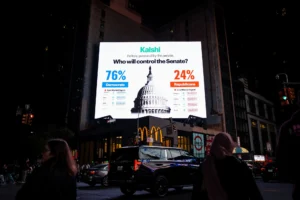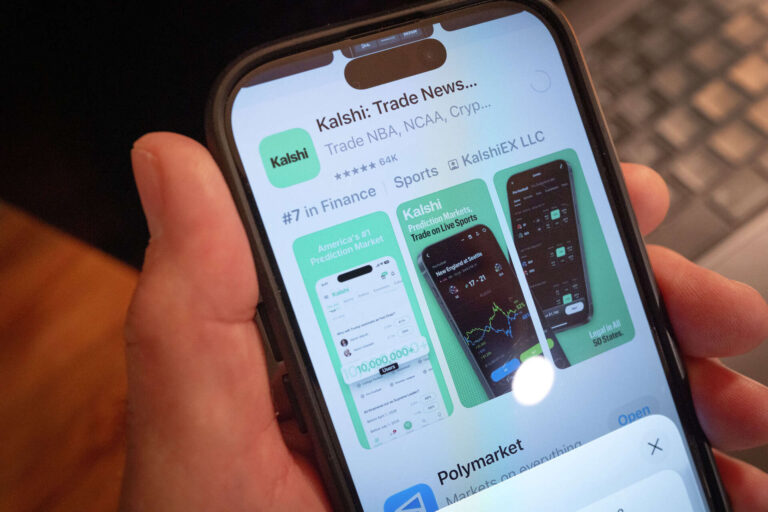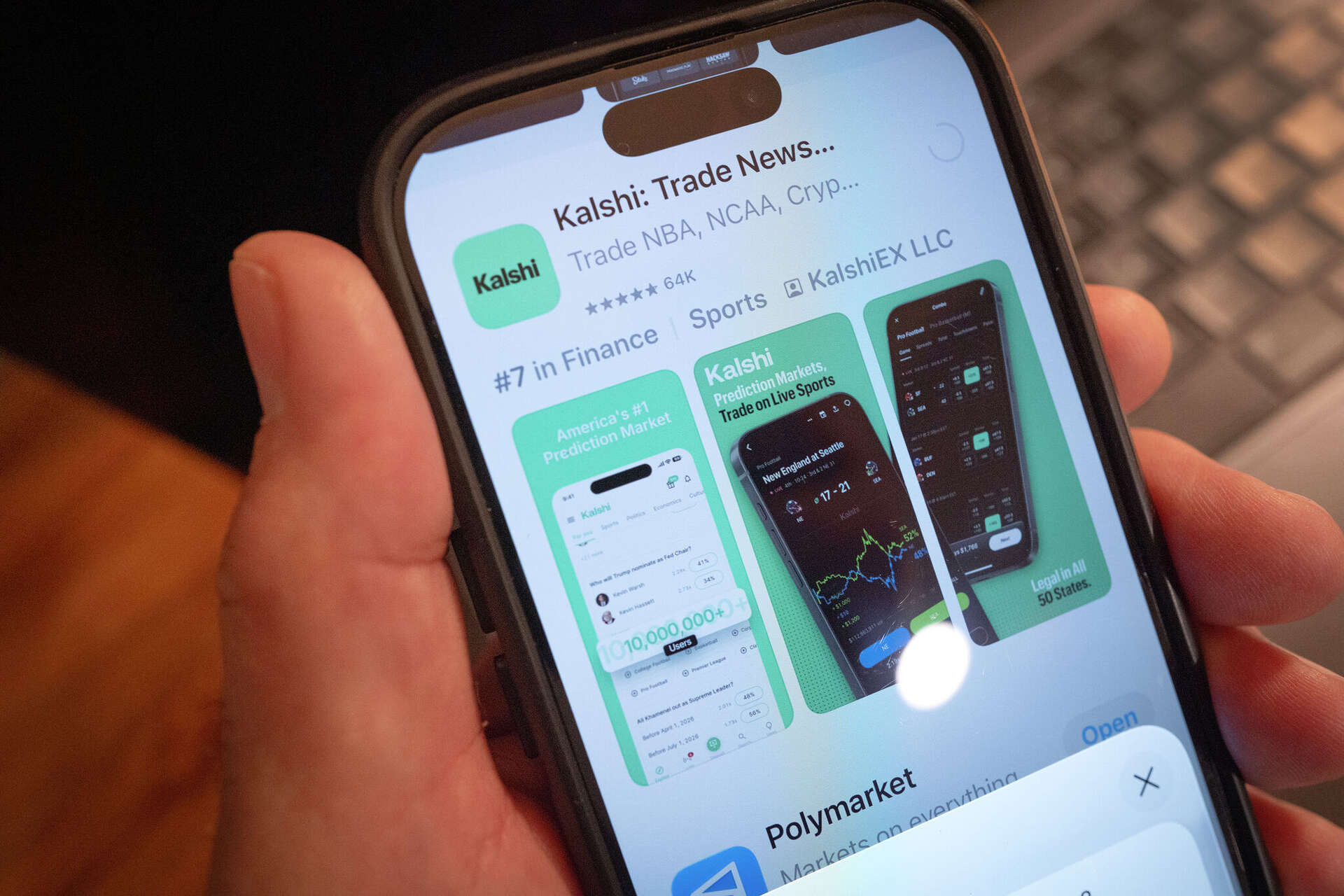
Texas lawmakers have rejected daily fantasy sports (2017) and online sports betting (2023 and 2025). Georgia’s House rejected a sports betting constitutional amendment as recently as March. Yet the Dallas Morning News reported on Nov. 9 that Kalshi, Polymarket, FanDuel Predicts and DraftKings Predictions all accept sports trades from Texans, and all four also operate in Georgia.
DraftKings doesn’t hide it. According to the Texas Tribune, if you open DraftKings’ sports betting app in Texas, it automatically switches you to its prediction market. FanDuel President Christian Genetski has described prediction markets as a “reasonable facsimile” of sportsbooks.
Most coverage will focus on the workaround. I’m more interested in why it has lasted, and why that may be about to change. Neither state’s attorney general had shown any interest in acting. On Nov. 3, voters replaced both.
Key Takeaways
- The two states: Texas and Georgia, the second- and eighth-largest states by population, both ban sports betting. All four major prediction platforms take sports trades from residents of both.
- The sportsbooks: FanDuel and DraftKings, which can’t run sportsbooks in either state, now reach those customers through their prediction-market products.
- Texas’s former AG: Ken Paxton’s office didn’t respond to requests to join multistate briefs (39 states and 37 states) arguing that the CFTC doesn’t have exclusive authority over these markets.
- The election: Democrat Nathan Johnson won the Texas attorney general race, and Democrat Tanya Miller won in Georgia, according to SCCG.
- New circuits: Texas is in the Fifth Circuit and Georgia in the Eleventh. Neither has ruled on prediction markets yet.
- Other states: Kalshi already faces active enforcement in Utah, Arkansas, Ohio, Tennessee and Louisiana.
How Sports Betting Reached Texas Without Being Legalized
| Sportsbook | Prediction market | |
|---|---|---|
| Legal status in Texas | Illegal | Operating (CFTC-regulated, per operators) |
| Legal status in Georgia | Illegal | Operating |
| Regulator | State gaming commission | CFTC |
| State tax | — | None |
| Minimum age | 21 (where legal) | 18 |
| FanDuel product in Texas | Not available | FanDuel Predicts |
| DraftKings product in Texas | App redirects | DraftKings Predictions |
| Parlays | Yes | Yes (“combos”) |
DraftKings says there is “clear consumer interest” in Texas.
“Drawing on more than a decade of experience serving sports fans, and informed by ongoing, thoughtful dialogue with regulators and policymakers, DraftKings has developed a platform designed to enhance the fan experience while making available responsible engagement tools and resources,” a DraftKings spokesperson told the Tribune.
The volume shows the demand. Sports contracts make up 80% to 90% of Kalshi’s monthly trading volume, according to Artemis. Kalshi just had consecutive $5 billion days, mostly from parlays.
Why Texas Hadn’t Acted
Texas has opposed gambling expansion for years, which makes its silence on prediction markets unusual.
When the National Association of Attorneys General and Ohio’s attorney general asked Texas to sign a brief arguing the CFTC doesn’t have exclusive authority over these markets, 39 states joined. Paxton’s office didn’t respond. When they asked again for a similar brief with 37 states, Paxton’s office again didn’t respond. It also refused to release internal communications on prediction markets, citing attorney-client privilege.
Lt. Gov. Dan Patrick did act. In March, he directed the Senate State Affairs Committee to study how federal law has been used to “circumvent Texas gambling prohibitions” and to prepare recommendations for the 2027 session. When the Tribune reported on it in May, the committee had no meetings scheduled.
Opponents think politics explains the delay. Donald Trump Jr. advises both Kalshi and Polymarket, and Truth Social has announced its own prediction market. “There’s a lot of political overtones to this,” said Russ Coleman, board chair of Texans Against Gambling.
Texans Bet on an Election Texas Law Says They Can’t Bet On
This is the part I keep coming back to. Texas Penal Code Chapter 47 makes election betting illegal. Yet more than $46 million was traded on Kalshi alone on the Texas Senate race between James Talarico and Ken Paxton, who lost.
“Elections, they’re not just economic activity, they’re core functions of our state sovereignty,” said Jonathan Covey, policy director for Texas Values. “We have Penal Code chapter 47 that says election betting is illegal, and prediction markets have been trying to sort of relabel that activity.”
Kalshi has also fined a Texas congressional candidate, Zeke Enriquez, $784 and banned him for five years for buying less than $100 of contracts on his own Republican primary. That shows Kalshi can police its own market. It also shows Texans were trading on Texas elections in the first place.
What Changed on Nov. 3
Attorney Daniel Wallach, who follows prediction-market litigation closely, said the election-night results in Texas and Georgia mattered more than anything else that night:
“For prediction market litigation watchers, Georgia and Texas may be the two biggest developments of election night. Under the status quo, there was no prospect of state enforcement against Kalshi. In one night, two of the country’s most populous states may be back in play.”
| State | Old AG | Incoming AG | Federal circuit | Ruled on prediction markets? |
|---|---|---|---|---|
| Texas | Ken Paxton (R) | Nathan Johnson (D) | Fifth | No |
| Georgia | Did not sign the 44-AG letter | Tanya Miller (D) | Eleventh | No |
Neither incoming attorney general has announced plans. But a new state lawsuit would bring the preemption question to two federal appeals courts that haven’t yet addressed it. The Third Circuit has sided with Kalshi, and the Sixth and Ninth Circuits have sided with the states. More circuits ruling makes a clear split, and Supreme Court review, more likely.
The CFTC Wants the Opposite
The timing makes this a direct clash. Three days after the election, the CFTC told every federally registered exchange to stop geoblocking states within 30 days or explain why not. In Washington, the federal regulator is pushing for full national access. In Austin and Atlanta, incoming state officials may soon try to remove access.
Kalshi says it is open to discussion. “We are regulated at the federal level, but of course, given now the popularity of prediction markets, we are doing a lot of educating on the state level,” Sara Slane, Kalshi’s head of corporate development, told the Tribune. “That’s the dialogue that we’ll envision having, certainly, in the state of Texas.”
Where Kalshi Faces Enforcement
| State | Status |
|---|---|
| Utah | Criminal charges against Kalshi and co-founders. Arraignment Dec. 4 |
| Ohio | Cease-and-desist letters to 10 platforms. Sixth Circuit sided with the state |
| Tennessee | Sixth Circuit sided with the state |
| Arkansas | Active enforcement |
| Louisiana | Active enforcement |
| Michigan | State court injunction, geofenced |
| Nevada | State court injunction, geofenced |
| Texas | New Democratic AG; Lt. Gov. study for 2027 |
| Georgia | New Democratic AG |
Why the Texas Gap Matters
For sportsbooks, Texas has been the biggest market they couldn’t enter. Prediction markets let them in without needing lawmakers. They could now face a choice they’ve avoided: if a Texas attorney general argues that a FanDuel Predicts combo is an illegal bet under Chapter 47, FanDuel must either defend it as a derivative or withdraw from the state.
“It would be almost like malpractice on our part to pretend not to know that this would be harmful,” said Carol Ann Maner, chair of the Texas Coalition on Problem Gambling.
Texas and Georgia together have about 42 million residents, and there has been no state enforcement in either. The industry’s easiest route into states with no legal sports betting depended on attorneys general who didn’t act, and both have now been replaced.
FAQ: Prediction Markets in Texas and Georgia
Is sports betting legal in Texas?
No. Texas lawmakers rejected online sports betting in 2023 and 2025. But prediction markets including Kalshi, Polymarket, FanDuel Predicts and DraftKings Predictions accept sports trades from Texans, arguing they’re federally regulated by the CFTC.
Can you use DraftKings in Texas?
DraftKings’ sportsbook isn’t available in Texas, but opening its app there redirects users to DraftKings Predictions, its prediction market, according to the Texas Tribune.
Are prediction markets legal in Georgia?
Georgia bans sports betting, but prediction markets operate there under CFTC regulation. The state hasn’t taken enforcement action, though a new attorney general takes office after the Nov. 3 election.
Will Texas ban prediction markets?
Nothing has been announced. Lt. Gov. Dan Patrick has asked the Senate to recommend measures for the 2027 session, and Democrat Nathan Johnson’s win in the attorney general race could lead to enforcement. Any state action would face a challenge from the CFTC.