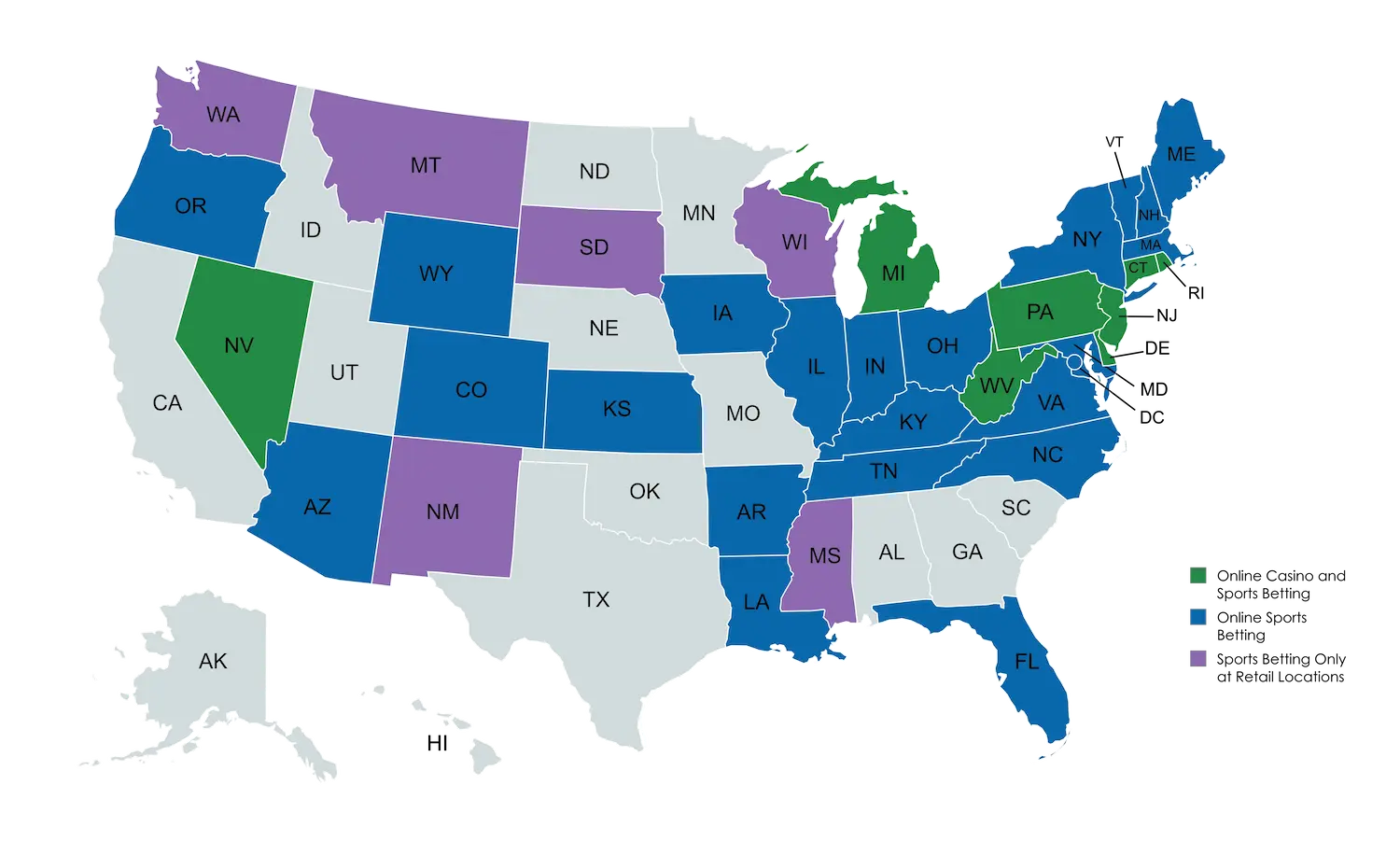
Gambling bills were filed in 27 states in 2026, according to Gambling Insider’s legislative tracker. They covered online casinos, mobile sports betting, sweepstakes bans, lottery changes, taxes and prediction markets. Expansion advocates hoped for a breakthrough year. The bills that actually became law mostly restricted gambling instead. Sweepstakes bans cleared legislatures by wide margins, and some survived a governor’s veto. Online casino and sports betting bills mostly died in committee, failed floor votes or got pushed to 2027. Meanwhile, much of the year’s biggest gambling policy came out of courtrooms rather than legislatures.
This breakdown covers each state with notable 2026 activity: what was filed, what passed, and what carries into next year.
Key Takeaways
- Sweepstakes bans dominated. Indiana, Louisiana, Maine, Tennessee and Oklahoma all passed bans in 2026, and California’s AB 831 took effect in January. Oklahoma’s ban survived a veto override and takes effect Nov. 1.
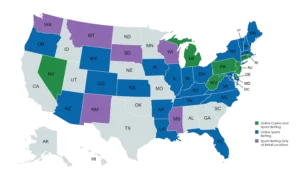
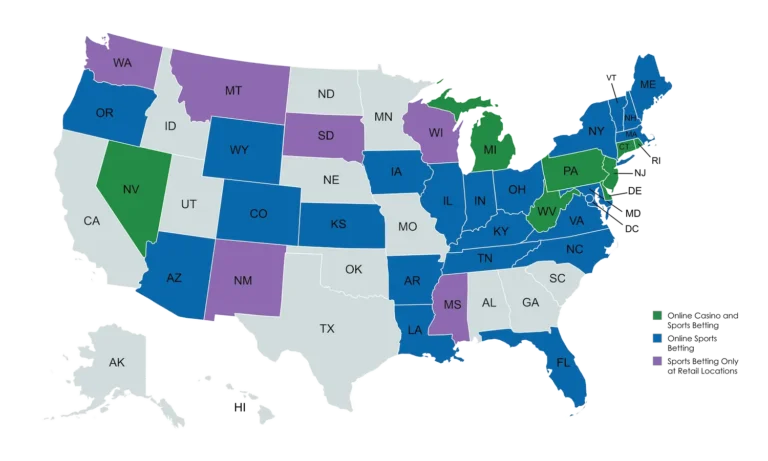
- Online casino expansion stalled almost everywhere. Maryland, Virginia and Massachusetts all failed to pass iGaming bills, and Ohio’s never left committee. Maine is the only new iGaming state, and it hasn’t launched yet. That leaves seven live online casino states.
- Sports betting expansion failed in the South. Georgia’s House vote fell 57 votes short. Texas and California still have no legal sports betting, though prediction markets are operating in both.
- The courts decided the prediction market fight. The Sixth and Ninth Circuits sided with states, and the Third Circuit sided with Kalshi. The question is headed to the Supreme Court.
- Federal action is about taxes. A House committee voted 38-5 to restore the full gambling loss deduction.
At a Glance: 2026 Gambling Legislation by Category
| Category | Passed / In Effect | Failed / Stalled | Pending or Carried Over |
|---|---|---|---|
| Sweepstakes bans | CA (AB 831), IN (HB 1052), LA, ME (LD 2007), TN, OK (SB 1589) | — | MS (SB 2104), MD (SB 112), VA (SB 579), D.C. |
| Online casino | ME (pending launch) | MD (SB 885), VA (SB 118/HB 161), MA | OH (HB 298), NH (SB 104), IL (SB 1963), NY (S2614), D.C. |
| Mobile sports betting | — | GA (HR 450) | MS (HB 1581), AK (HB 145), HI (SB 3303) |
| Prediction markets | — | — | CT (HB 5038), HI (HB 2198), TX (2027 session) |
| Tax & enforcement | — | — | Federal FULL HOUSE Act, WV (HB 4397/4398), IA (SF 2289), WY (SF 0044) |
Federal Legislation
FULL HOUSE Act (S. 2230 / H.R. 6985) – This is a bipartisan effort to repeal the provision in the One Big Beautiful Bill that caps gambling loss deductions at 90%. Under that rule, break-even gamblers owe tax on money they never actually kept. The bill would restore the 100% deduction.
Status: Advancing. A House committee voted 38-5 in September to restore the full deduction, retroactively.
State-by-State Breakdown
Alabama
- SB 257 – A constitutional amendment that would authorize a state lottery, up to seven land-based casinos and statewide mobile sports betting, subject to a statewide vote.
Status: Introduced. No final outcome confirmed.
Alaska
- HB 145 – Would authorize statewide mobile sports betting at a 12% tax rate. It’s Alaska’s main expansion bill this session.
Status: Introduced. No final outcome confirmed.
California
- AB 831 – Bans sweepstakes casinos. Liability reaches payment processors, geolocation providers, game suppliers and media affiliates, with fines of up to $25,000 per violation.
Status: In effect since January 2026.
Also watch: California tribes won a key prediction market ruling on Sept. 16. The Ninth Circuit found they’re likely to succeed in arguing that Kalshi’s sports contracts are Class III gaming on tribal land, and Kalshi has since geofenced three reservations. Tribes have also outlined an online sports betting framework, likely aimed at the 2028 ballot. California and Texas together generate 43% of all sports event contract volume nationally.
Connecticut
- HB 5038 (Underage Wagering Prevention Act) – Gov. Ned Lamont’s bill would bar anyone under 21 from prediction markets and restrict aggressive advertising.
- HB 5551 – A state income tax deduction for gambling losses to offset the federal 90% cap.
Status: HB 5038’s final outcome is unconfirmed. Kalshi is also in active litigation in Connecticut.
District of Columbia
- Council proposal – Would legalize online casinos under the Office of Lottery and Gaming, with a 25% tax on gross revenue, a $2 million license fee and a minimum age of 21. It also bans sweepstakes casinos.
Status: Introduced in September 2026.
Florida
- SB 530 – Revises the Department of the Lottery’s powers and duties.
- SB 204 – Requires every gaming machine to be authorized by the Florida Gaming Control Commission.
Status: Legislative outcomes unconfirmed. Florida’s biggest moves this year came from the attorney general rather than the legislature. AG James Uthmeier sued Stake and VGW in August, naming their payment processors (Praxis, Breeze Labs, Yodlee, Trustly and Worldpay). He then gave Google, Meta, Reddit, Snap and TikTok an Oct. 23 deadline to explain how they keep sweepstakes ads away from Florida users.
Georgia
- HB 910 / SR 131 – Proposals to legalize mobile sports betting and casino gaming.
- HR 450 – A constitutional amendment for sports betting.
Status: Failed. HR 450 lost on the House floor 63-98, well short of the 120 votes needed.
Hawaii
Hawaii is one of only two states with no legal gambling of any kind.
- SB 3303 – Would legalize mobile sports betting with at least six licenses and a 15% tax.
- HB 2198 – Would define prediction markets as illegal gambling and ban them.
- HB 2222 – Would authorize a single land-based casino in Honolulu.
- SB 893 – Explores a casino at the New Aloha Stadium development.
- HB 1434 – Would create a state lottery and gaming corporation.
Status: Introduced. No final outcomes confirmed.
Illinois
- SB 1963 / HB 3080 (Internet Gaming Act) – Would legalize online casinos at a 25% tax rate.
Status: Not passed. Regulators were more active than lawmakers. The Illinois Gaming Board sent cease-and-desist letters to 65 sweepstakes operators in February, though only two had complied by May. Stake.us moved Illinois accounts to redeem-only in late September. The board also approved a first-of-its-kind marketing exclusion list for formerly self-excluded gamblers.
Indiana
- HB 1052 – Bans multi-currency sweepstakes casinos, with civil penalties up to $100,000 per violation. It passed the House 87-11.
- SB 120 (Student Athlete Protection Act) – Would bar college player props.
Status: The sweepstakes ban passed and operators have exited the state. SB 120’s outcome is unconfirmed. Separately, the Indiana Gaming Commission unanimously rejected the NCAA’s request to ban pre-game college player props on Sept. 24, saying athlete harassment is an issue for the legislature.
Iowa
- SF 2289 – Expands the Iowa Racing and Gaming Commission’s authority to bring civil enforcement against unlicensed gambling.
Status: Introduced. No final outcome confirmed.
Kentucky
Status: No major bill, but a lot of activity outside the legislature. AG Russell Coleman sued VGW in June without first sending a cease-and-desist. Kentucky is in the Sixth Circuit, which ruled on Sept. 25 that states can enforce their gambling laws against Kalshi.
Louisiana
- HB 53 – Classifies online sweepstakes gaming as racketeering and a deceptive trade practice.
- HB 639 – Sets taxes on online sports betting and dedicates the revenue to infrastructure.
Status: The sweepstakes ban took effect Aug. 4, 2026. It defines dual-currency casino games as “gambling by computer.”
Maine
- LD 2007 – Criminalizes dual-currency sweepstakes platforms.
Status: Passed, and operators have exited. Maine is also set to become the eighth state with legal online casinos, pending launch.
Maryland
- SB 885 – Would license and regulate online casinos and online bingo.
- SB 112 – A strict ban on sweepstakes casinos.
Status: SB 885 got a committee hearing but missed the legislative deadline. SB 112’s outcome is unconfirmed.
Massachusetts
- SB 235 (Massachusetts Internet Gaming Act) – Would legalize online casinos for the state’s three retail licensees.
Status: Stalled. The related House bill, HB 4431, was sent to study. The Massachusetts Gaming Commission is reviewing operators’ use of AI after a New York Times report on DraftKings, and a state court is weighing an injunction against Kalshi’s sports markets.
Michigan
- SB 511 – Would decriminalize small social wagering for groups of up to 100 people, with a $25 maximum bet.
Status: Introduced. Michigan regulators are reviewing DraftKings’ AI and VIP practices, and the state has already banned Kalshi’s sports contracts.
Mississippi
- HB 1581 (Mobile Sports Wagering Act) – Would authorize mobile sports betting and online race books, with tax revenue going to the state pension system. It passed the House for the third straight year.
- SB 2104 – Criminalizes online sweepstakes casinos. It cleared the Senate 52-0.
Status: Final outcomes unconfirmed for both.
Missouri
Status: Missouri launched legal sports betting, and its attorney general has ordered six prediction market operators, including Kalshi, Polymarket and Robinhood, to stop offering sports event contracts.
New Hampshire
- SB 104 – Legalizes online casinos. It would send 35% of net profits to community college scholarships and 10% to the lottery. The state projects $5 million in revenue in year one, rising to $30 million by year three.
Status: Advancing. It passed its first Senate vote 13-11 in September and moved to the Senate Finance Committee. Republicans backed it 10-4, while Democrats opposed it 7-3.
New Jersey
- SCR 31 – A constitutional amendment that would allow slot machines at racetracks in North Jersey.
- S1500 – Would tax and regulate sweepstakes platforms under the iGaming framework rather than banning them.
- S2160 – Would ban play-by-play “micro-bets.”
Status: Outcomes unconfirmed. New Jersey online casinos won $259.3 million in August, more than Atlantic City’s casino floors earned.
New York
- S2614 / A5922 – Would authorize online casino and online lottery gaming.
Status: Not passed. Enforcement was the bigger story. AG Letitia James got $8 million from VGW in September, sued Kalshi in July, and sued Polymarket in September. Polymarket countersued in federal court.
North Carolina
- H999 – Would authorize video gaming terminals in retail locations statewide.
- H424 – Would exempt certain social games in homes and community clubhouses.
Status: Introduced. No final outcomes confirmed.
Ohio
- HB 298 – Online casinos for Ohio’s 11 existing casinos and racinos, with a 28% tax. Promotional credits for online play would be banned.
- SB 197 – Online lottery alongside online casino platforms.
Status: Stalled. HB 298 has been in the House Finance Committee since May 2025, and the session ends in December. Sponsor Rep. Brian Stewart sees 2027 as the opening, after term-limited Gov. Mike DeWine leaves office. DeWine said this month that the state will enforce its gambling laws against Kalshi after the Sixth Circuit ruling.
Oklahoma
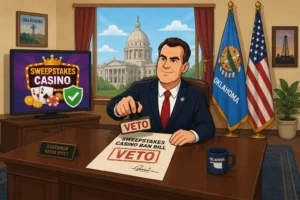
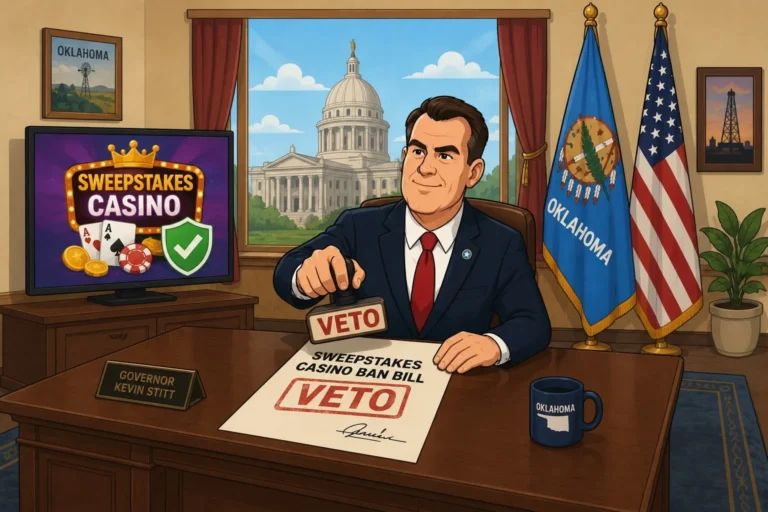
- SB 1589 – Classifies dual-currency sweepstakes casinos as illegal gambling, makes violations felonies, and extends liability to suppliers, payment processors, geolocation providers and affiliates. Tribal gaming is exempt.
Status: Law. Gov. Kevin Stitt vetoed it, and lawmakers overrode the veto 34-10 in the Senate and 68-19 in the House. It takes effect Nov. 1, 2026.
Rhode Island
- HB 7197 (Social Gaming Act) – Would legalize low-stakes social gaming such as office pools and squares.
Status: Introduced. No final outcome confirmed.
Tennessee
- HB 1768 – Restrictions on sports betting on college campuses.
Status: Tennessee also passed a sweepstakes ban in 2026. Tennessee is in the Sixth Circuit, which ruled the state can enforce its gambling laws against Kalshi.
Texas
- HJR 137 / HJR 134 – Constitutional amendments to authorize casino gaming and sports betting.
Status: The legislature isn’t in session. It returns Jan. 12, 2027, for what will be the fifth straight session to consider online sports betting. A Senate committee held a hearing on prediction markets in September, and Lt. Gov. Dan Patrick has made “closing gambling loopholes” a priority. Las Vegas Sands-backed PACs put nearly $10 million into the 2026 primaries to support casino legalization.
Vermont
- S318 – Would license two new casinos.
Status: Introduced. No final outcome confirmed.
Virginia
- SB 195 / SB 558 (Virginia Gaming Commission Act) – Would create a dedicated gaming commission to take over oversight of casinos, sports betting and racing from the Virginia Lottery.
- SB 118 / HB 161 – Would legalize online casinos. Amendments require the bill to pass in both 2026 and 2027.
- SB 756 – Would add Fairfax County (Tysons) as a possible casino host, subject to a local referendum.
- SB 579 – Would ban online sweepstakes, with civil penalties of $10,000 to $100,000 per violation.
- HB 145 – Would set a 10% tax on DFS operator revenue.
Status: The iGaming bill failed when the House and Senate each passed versions but couldn’t agree on one. It’s expected to return in 2027. Other outcomes are unconfirmed.
West Virginia
- HB 4397 – Would raise the online casino tax from 15% to 25%.
- HB 4398 – Would raise the sports betting tax from 10% to 25%.
Status: Introduced. No final outcomes confirmed.
Wyoming
- SF 0044 – Tightens the definitions of “gambling” and “bona fide social relationships” to close loopholes used by sweepstakes-style and unregulated social gambling operations.
- HB 0162 – A 2025 online casino bill that still serves as the framework for 2026 discussions.
Status: Introduced. No final outcomes confirmed.
Prediction Markets: The Courts Moved Faster Than Legislatures
Few legislatures passed prediction market bills in 2026, but federal courts made major rulings:
- Third Circuit (April): Ruled for Kalshi against New Jersey.
- Ninth Circuit (August): Ruled for Nevada. In September, it ruled for three California tribes.
- Sixth Circuit (Sept. 25): Ruled 3-0 for Tennessee and Ohio, finding that sports contracts aren’t swaps and that federal law doesn’t preempt state gambling laws.
- Supreme Court: Petitions from New Jersey and Robinhood are pending. Neither case was on the Court’s first list for the term, released Oct. 3.
More than 25 states and tribal entities are now in litigation with Kalshi or the CFTC.
What to Watch in 2027
- Ohio: A new governor and a possible income tax repeal could make room for HB 298.
- Virginia: The iGaming bill returns under the two-session requirement.
- Texas: A fifth straight session with sports betting on the table, now combined with a push against prediction markets.
- Supreme Court: A decision on prediction markets would affect every state with or without legal sports betting.
- Sweepstakes enforcement: Expect more states to copy Florida and Oklahoma by targeting payment processors, platforms and suppliers instead of only operators.
Frequently Asked Questions
How many states introduced gambling legislation in 2026?
Lawmakers in 27 states introduced bills covering casino gaming, sports betting, sweepstakes, lottery, taxation and prediction markets, according to Gambling Insider.
Which states banned sweepstakes casinos in 2026?
Indiana, Louisiana, Maine, Tennessee and Oklahoma passed bans, and California’s AB 831 took effect in January. New York’s ban took effect earlier.
How many states have legal online casinos?
Seven states have live online casino markets. Maine is set to become the eighth, pending launch.
How many states have legal sports betting?
Sports betting is legal in 39 states plus Washington, D.C.
Are prediction markets legal?
That’s being decided in court. The Sixth and Ninth Circuits have ruled that states can enforce their gambling laws against sports event contracts, and the Third Circuit ruled the other way. The Supreme Court is expected to resolve the split.