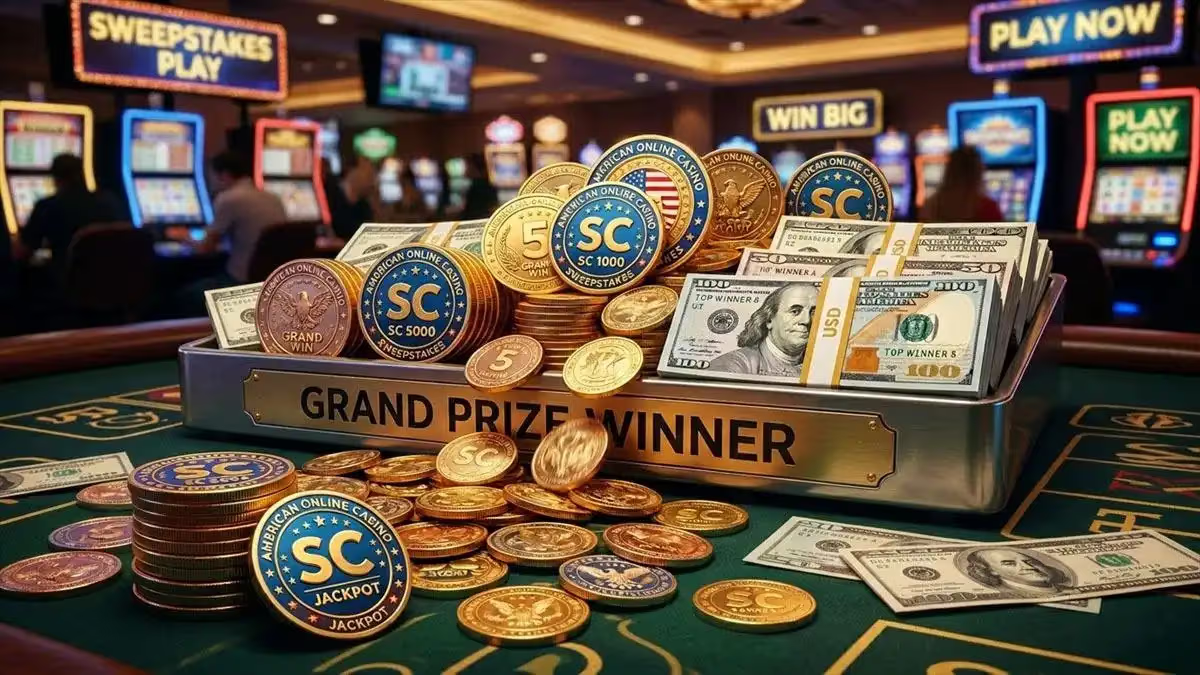
The sweepstakes casino industry’s legal footing keeps shrinking. As of September 2026, ten states — California, New York, New Jersey, Connecticut, Montana, Indiana, Maine, Tennessee, Louisiana and Oklahoma — have passed explicit statutory bans on the dual-currency model that let platforms like Chumba Casino, LuckyLand Slots and dozens of smaller brands offer casino-style games without holding a state gambling license. Three more states — Idaho, Michigan and Washington — block sweepstakes operators under pre-existing gambling laws.
The American Gaming Association has been a driving force behind the wave, arguing that sweepstakes platforms offer a product functionally identical to licensed online casino games while avoiding gaming taxes, regulatory audits and responsible gambling requirements. That argument has found rare bipartisan support in state legislatures, with lawmakers from both parties describing the sweepstakes model as unlicensed gambling operating through a legal loophole.
California’s ban, signed into law in 2025 and taking full effect at the start of 2026, has been among the most consequential, extending misdemeanor liability to operators, payment processors and affiliates alike. Stake.us, Pulsz, McLuck and Chumba all exited the California market entirely by the end of 2025 rather than risk enforcement. Tennessee followed a similar path in 2026, with the state attorney general issuing cease-and-desist orders to roughly 40 operators, most of which complied within 30 days.
Enforcement mostly comes down to geolocation. Operators use IP and GPS-based tools to detect a player’s location and block access — or at minimum, purchases — for anyone resolving to a banned state. That technology has grown more accurate, though not foolproof, and industry observers expect a handful of states to eventually pursue licensing frameworks rather than outright bans as a middle-ground solution.
For now, the trend line points in one direction: fewer states, tighter enforcement, and a sweepstakes industry that looks increasingly likely to consolidate around whichever markets remain open.