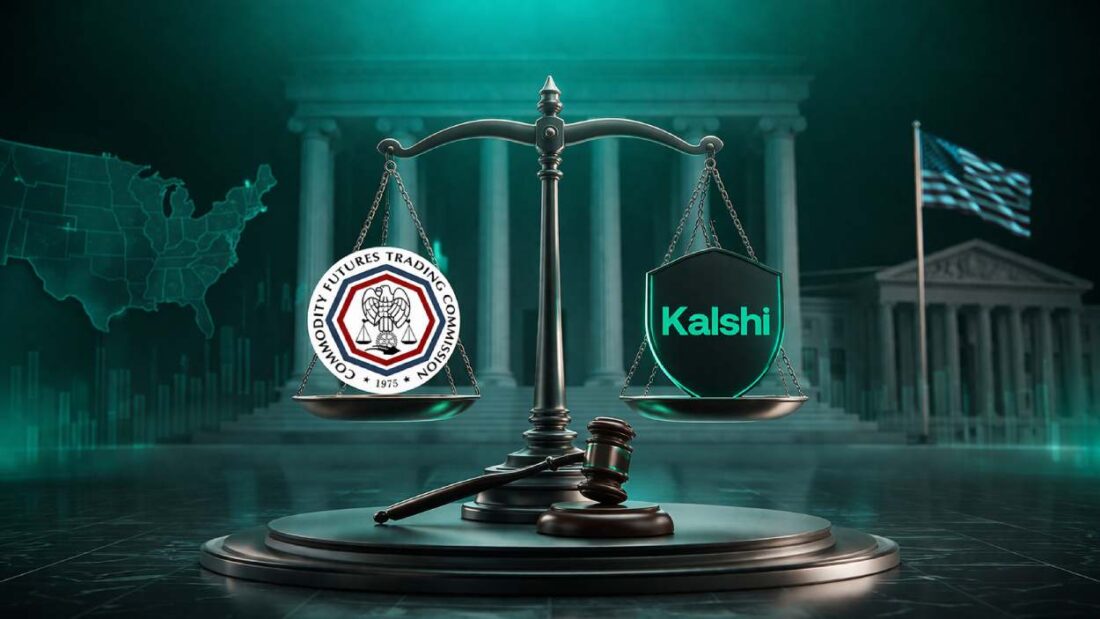
Fourteen in a row. That’s how many consecutive federal court rulings Kalshi has dropped since the Minnesota decision. Zoom out further and states have won 37 of the 43 rulings on preliminary injunctions, TROs, and stays pending appeal across this entire fight — 86%. For months I’ve called this a genuinely unsettled legal question, and on paper it still is one: there’s a real circuit split, and a Supreme Court fight feels inevitable. But a coin that’s landed the same way 37 times out of 43 stops behaving like a coin.
Worth being careful about what this streak actually shows. Most of these are preliminary rulings — a judge deciding whether a state can enforce its gambling law while the real case plays out, not a final verdict. The Third Circuit’s ruling for New Jersey and the Ninth Circuit’s for Nevada are both still live on appeal, and the Supreme Court could theoretically erase all 37 state wins with one decision. Nothing here is over.
What’s harder to wave away is who’s reaching these conclusions. Different judges, different circuits, different presidents’ appointees, all looking at the same product Kalshi is selling and independently landing on the same answer. That’s not one judge’s pet reading of the Commodity Exchange Act — it’s a pattern. Prediction markets built their whole legal strategy on federal preemption being the obvious answer. 37-to-6 is not what obvious looks like.
None of this changes much for anyone actually using these platforms right now. Kalshi’s still live in most states while it appeals — a preliminary loss doesn’t shut anything down overnight, it just means the company’s fighting from further behind than it started. But if I ran a state AG’s office, I’d feel considerably better about my next case than I did a year ago. And if I were on Kalshi’s legal team, I’d want this in front of the Supreme Court as fast as possible, because every ruling between now and then is landing on the other side.