The Sixth Circuit ruled on Friday that Tennessee and Ohio can apply their gambling laws to Kalshi’s sports event contracts. Judges Julia Smith Gibbons, Eric Clay and Rachel Bloomekatz rejected every argument Kalshi made. The Sixth Circuit now joins the Ninth, which ruled against Kalshi in August, while the Third Circuit sided with Kalshi in April. Two federal appeals courts are on one side and one is on the other, and the Supreme Court already has petitions from New Jersey and Robinhood waiting. Most coverage will focus on the scoreboard. I’m more interested in how Kalshi lost.
The states needed to win on only one of two questions. The first was whether sports contracts count as “swaps” under the Commodity Exchange Act, which would put them under the CFTC’s exclusive jurisdiction. The second was whether that law overrides state gambling law even if they do. The court ruled for the states on both. On the swap question, the law requires the underlying event to be associated with a “potential financial, economic, or commercial consequence.” The panel read that to mean a consequence inherently tied to the event, not every ripple effect a lawyer can imagine. At oral argument, the judges asked Kalshi how a contract on corner kicks, or on whether an announcer says a certain word, has any economic consequence. Kalshi conceded that to a “layperson” it might be “hard to see.” The court’s response: if a layperson can’t see the economic consequence, “it would be a stretch to say such a contract is ‘associated’” with one. The judges also pointed out that under Kalshi’s own standard, even its example of a contract with no economic stakes, the color of the Super Bowl Gatorade shower, could qualify, because a yellow shower on TV might sell more yellow Gatorade.
What I keep coming back to is how poorly that reasoning fits what Kalshi is actually selling now. Kalshi did about $3 billion in notional volume last Saturday, and 63.6% of it was parlays, according to TickerTracker. InGame found that parlays priced at 1 cent or less have accounted for $37.2 billion in volume since June, 60% of Kalshi’s total, on only about $112.5 million actually staked by customers. The Sixth Circuit also looked at the hedging examples Kalshi likes to cite, such as an insurer covering a Spanish soccer club’s relegation risk and a New York bar hedging a Knicks promotion. It called them “isolated examples” and “a far cry” from showing that sports contracts are used to manage real economic risk. It’s hard to argue a 20-leg college football parlay at 0.1 cents is a hedging tool. The more Kalshi’s volume shifts toward lottery-ticket combinations, the harder its argument that these are financial products gets, and the easier it is for a judge to see them as bets.
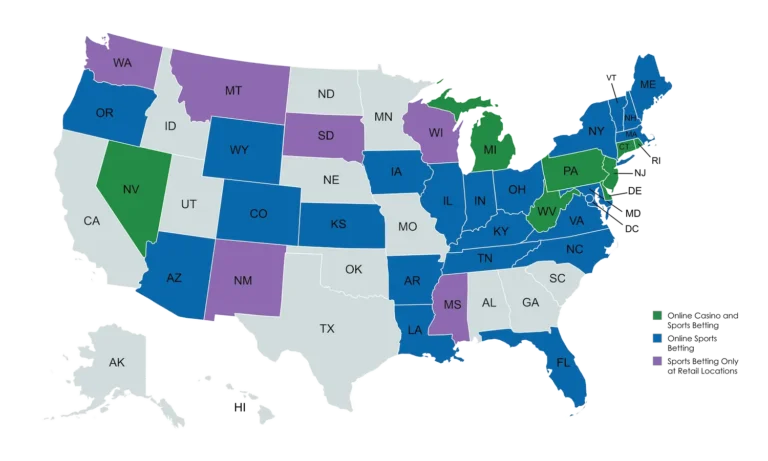
The preemption half of the ruling may hurt Kalshi more over time. The court found that the law’s “exclusive jurisdiction” language doesn’t clearly override state gambling laws, which only “incidentally burden” the exchanges. It said those laws apply only because exchanges chose to offer contracts “virtually indistinguishable from” sports bets. It also rejected the claim that Kalshi can’t comply with both state and federal law. The CFTC’s impartial-access rules don’t stop an exchange from offering a contract in some states but not others, and geofencing is costly but possible. Kalshi has already shown it can be done. It blocks sports trades in Nevada and Michigan, and just this week it geofenced three California tribal reservations after its Ninth Circuit loss.
Here’s where things stand. Ohio and Tennessee now have a clear path to kick sports contracts out of their states, and Kentucky, also in the Sixth Circuit, is in a similar position. Michigan, the circuit’s fourth state, has already banned them. Kalshi’s case against Utah is pending in the Tenth Circuit, and it has asked the Seventh Circuit to hear its fight with Wisconsin’s Ho-Chunk Nation. More than 20 states are now in litigation, New York sued Polymarket the day before this ruling, and the split between circuits keeps growing. The Supreme Court is increasingly likely to take the question. If it does, Kalshi will be defending a business that, going by its own weekend numbers, looks more like a sportsbook than ever.